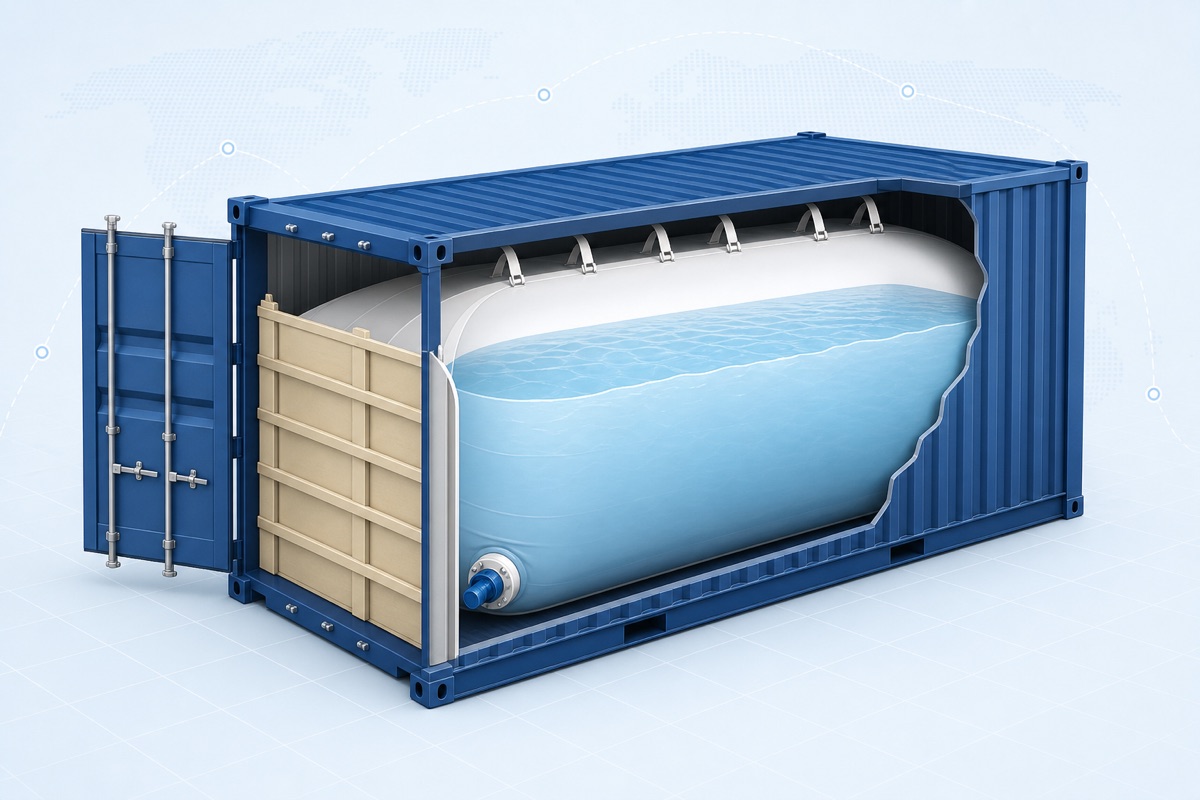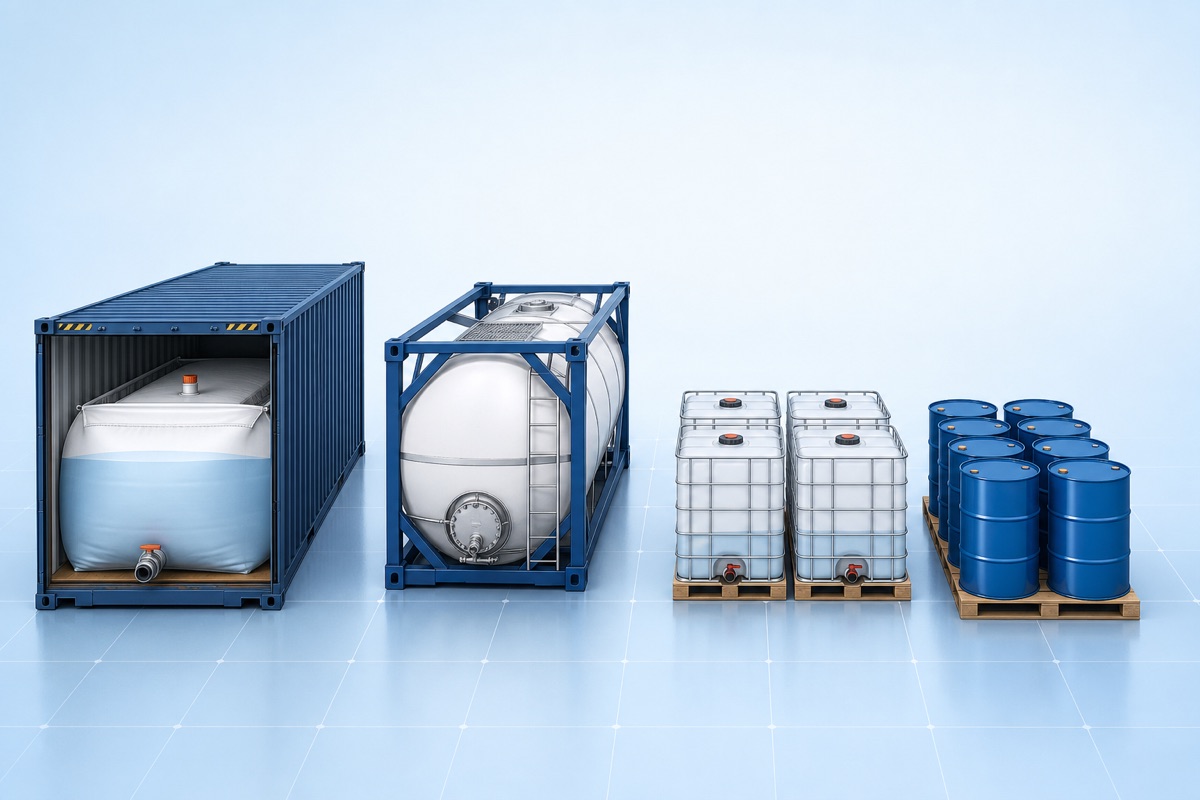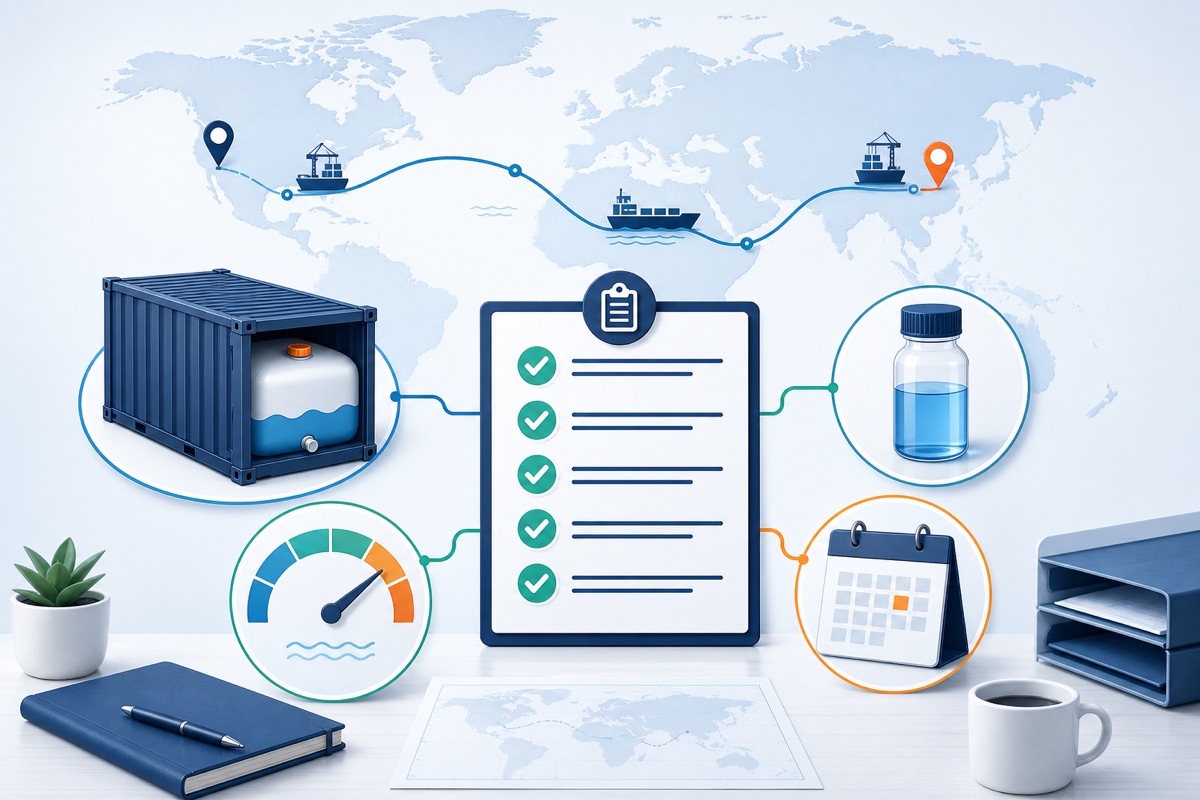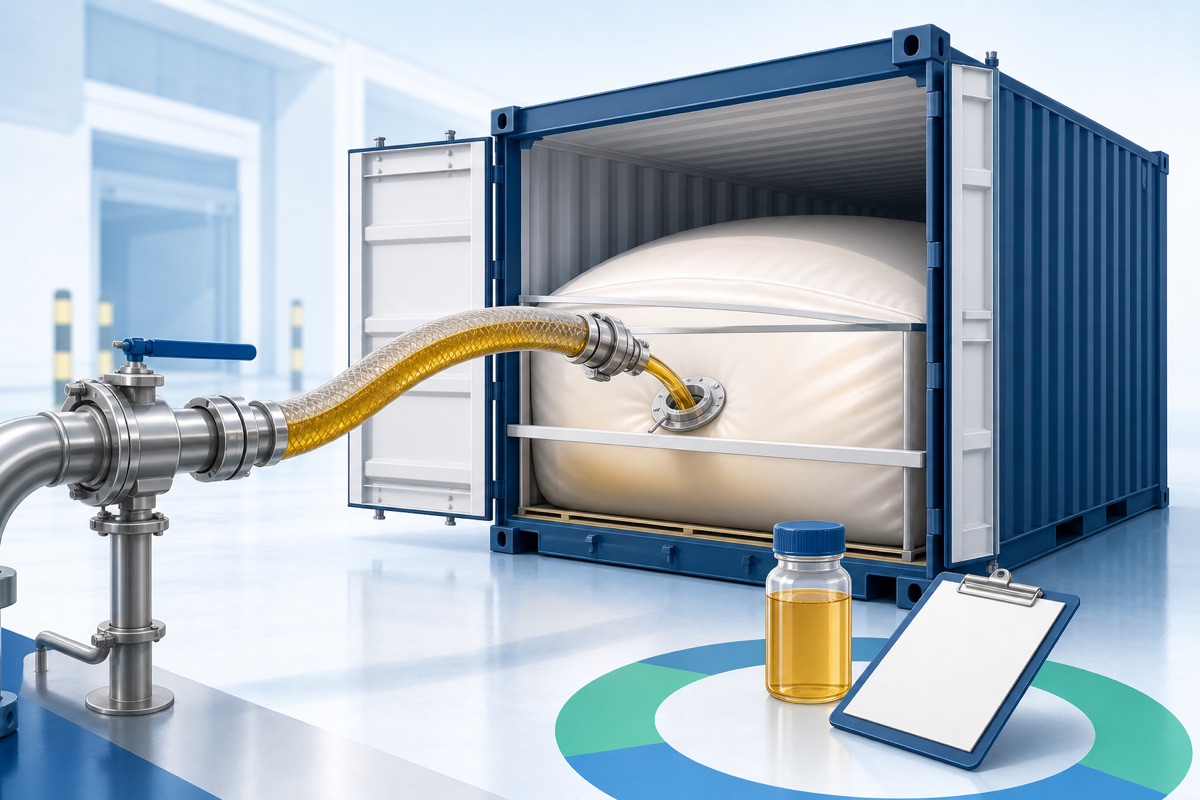
Shipping edible oil in a flexitank requires more than selecting a bag labelled for food use. The team needs the exact oil specification, documented suitability of every contact material, a clean transfer chain, appropriate temperature limits and a route accepted by the relevant parties.
Codex CXC 36-1987 provides hygiene and quality principles for bulk edible oils and fats. Supplier instructions and shipment-specific technical review remain essential because refined, semi-refined and crude oils can behave differently.
Define the oil before selecting the system
Use the complete product name and grade rather than a broad label such as vegetable oil. Record whether the product is crude, semi-refined or refined and provide the specification used by the seller and buyer. Density, viscosity and crystallisation or solidification behaviour affect mass calculations and transfer planning.
Agree loading, transit and discharge temperature ranges with the cargo owner and technical parties. Temperature decisions must protect product quality and stay within the approved limits of the flexitank, valve, hoses, container and any heating method.
- Exact oil type, grade and processing state
- Product specification, density and relevant quality limits
- Loading, transit and discharge temperature windows
- Viscosity and expected behaviour at the lowest route temperature
- Buyer requirements for sampling, seals and certificates
Check food-contact evidence and cargo compatibility
Ask the system supplier for documents that identify the bag, valve, seals and other product-contact materials and show their intended food-contact use for the relevant market. A generic marketing statement should not replace batch, product or design documentation required by the buyer or authorities.
Compatibility is product- and condition-specific. Written review should cover the exact oil, contact time and temperature range, including any possible interaction with film, valve or gasket materials. Verify supplier traceability and the instructions for storage, installation and use.
Food-grade documentation does not automatically prove compatibility with every edible oil or acceptance on every route. Keep compatibility and carrier review separate and explicit.
Protect hygiene across the transfer chain
Contamination can enter through the container, hoses, pumps, couplings, tanks, sampling tools or personnel practices. Define who inspects and releases each contact surface, which cleaning record is required and how open connections are protected before and after transfer.
The empty container should be structurally suitable, dry, clean, free from objectionable odour and free from protrusions or residues under the flexitank operator's criteria. Previous use and allergen controls may matter to the buyer even when the flexitank provides a new inner contact layer.
- Inspect and document the container before installation
- Verify hose and pump cleaning status and dedicated-use requirements
- Protect caps, couplings and sampling equipment from the environment
- Define personnel hygiene, access control and spill response
- Record seals and custody handovers
Manage temperature, oxidation, moisture and residues
Edible oils can be affected by excessive heat, prolonged exposure to air, moisture or contamination. The cargo owner should define product-specific limits and whether nitrogen management, filtered connections or other controls are required and compatible with the system. Do not add procedures that the flexitank design and site cannot safely support.
For oils that thicken or crystallise, plan discharge based on realistic ambient and cargo temperatures. Any heating equipment, pads or procedure must be approved for the exact system, container, product and site; uncontrolled external heating can damage cargo or packaging.
| Risk | Planning question |
|---|---|
| Temperature | What are the approved cargo and equipment limits at each stage? |
| Oxidation | How will air exposure and transfer time be controlled? |
| Moisture or foreign matter | Which surfaces are released as clean and how are openings protected? |
| Residual cargo | How will complete discharge, yield measurement and lawful recovery be handled? |
Pre-loading release checklist
Before loading begins, one responsible person should confirm that cargo, equipment, documents and site conditions match the approved plan. A last-minute product change, different hose, colder forecast or substitute container can invalidate an earlier review.
Record the selected system identity, container number, inspection result, planned quantity and calculated mass. Confirm the loading method and stop conditions with the operator, then preserve batch, sample, seal and VGM information for the shipment file.
- Cargo and batch match the reviewed specification
- Food-contact and compatibility documents are current and traceable
- Container, flexitank, restraint, valve, hose and pump pass inspection
- Quantity, density, mass and temperature are within approved limits
- Carrier, route, booking and destination arrangements are confirmed
- Sampling, seal, VGM and handover records are ready
Plan arrival, discharge and used-system handling
The receiver should receive the product and equipment data before arrival. Confirm safe container positioning, door-opening procedure, pump or gravity method, coupling compatibility, temperature condition, receiving-tank capacity and the action for leaks or abnormal bag movement.
After discharge, handle remaining product and packaging under local food, waste and environmental requirements. Recycling may be possible where an appropriate stream exists, but it depends on drainage, contamination, local facilities and the operator's instructions; never promise a recovery outcome before confirming the destination process.
Frequently asked questions
Can all vegetable oils be shipped in the same flexitank?
No. Oil type, grade, temperature, contact time and buyer requirements differ. Obtain written compatibility for the exact product and system, then confirm the carrier and route.
What does food-grade flexitank mean?
It should refer to documented suitability of the relevant product-contact materials and manufacturing controls for an intended food use. Ask for the actual evidence required by the destination market and buyer, not only a label.
Is an SDS required for edible oil?
Requirements vary by product and jurisdiction. If an SDS is not applicable or does not contain enough operating data, provide the technical specification, classification statement and temperature, density and viscosity information requested by the reviewing parties.
Can edible oil be heated inside a flexitank?
Only when the exact heating method, temperatures, system and site procedure have been approved by the relevant technical parties. Never improvise heating or exceed cargo and equipment limits.
What records should travel with the shipment file?
Common records include the product specification, compatibility review, food-contact evidence, container and system inspection, batch and sample data, quantity and mass calculation, seals, VGM and handover information. Contractual requirements may add more.
Authoritative references
Prepare an edible-oil shipment brief
Share the exact oil specification, temperatures, quantity, route and food-contact requirements. We will organise the file and flag missing compatibility, carrier or operating confirmations.
Start the edible-oil checklist