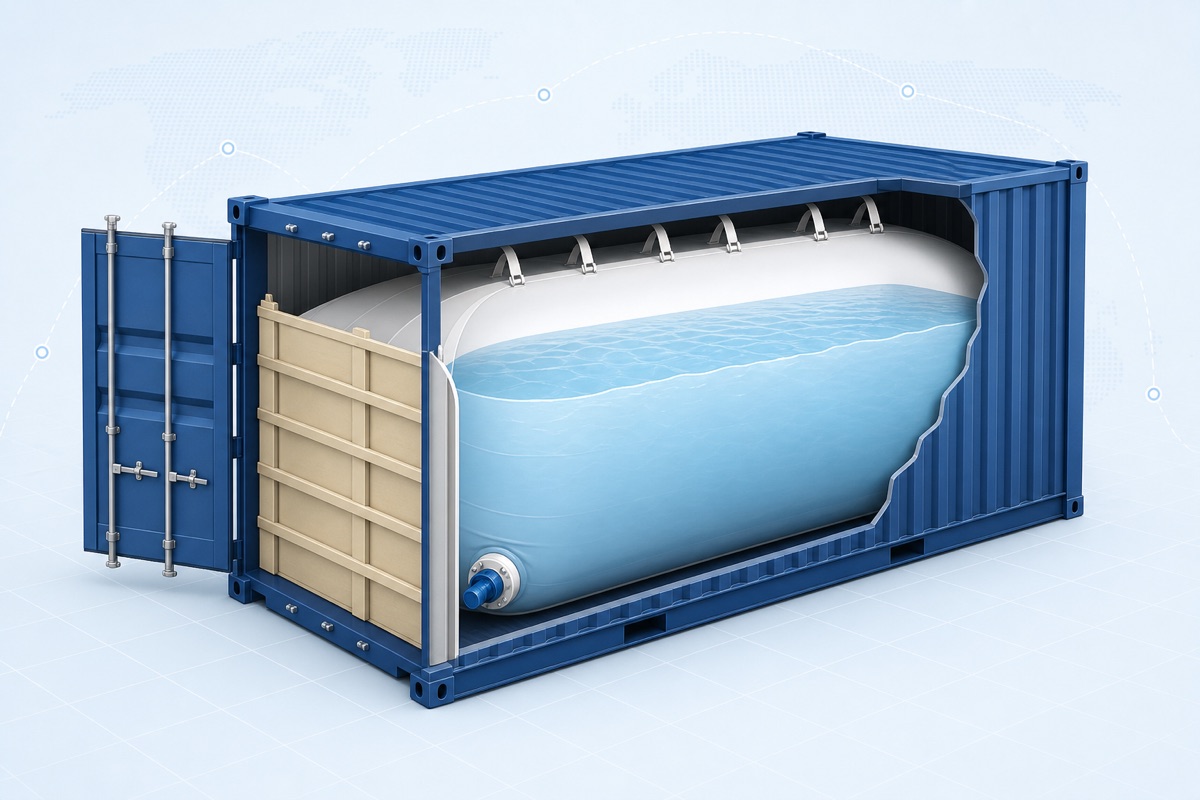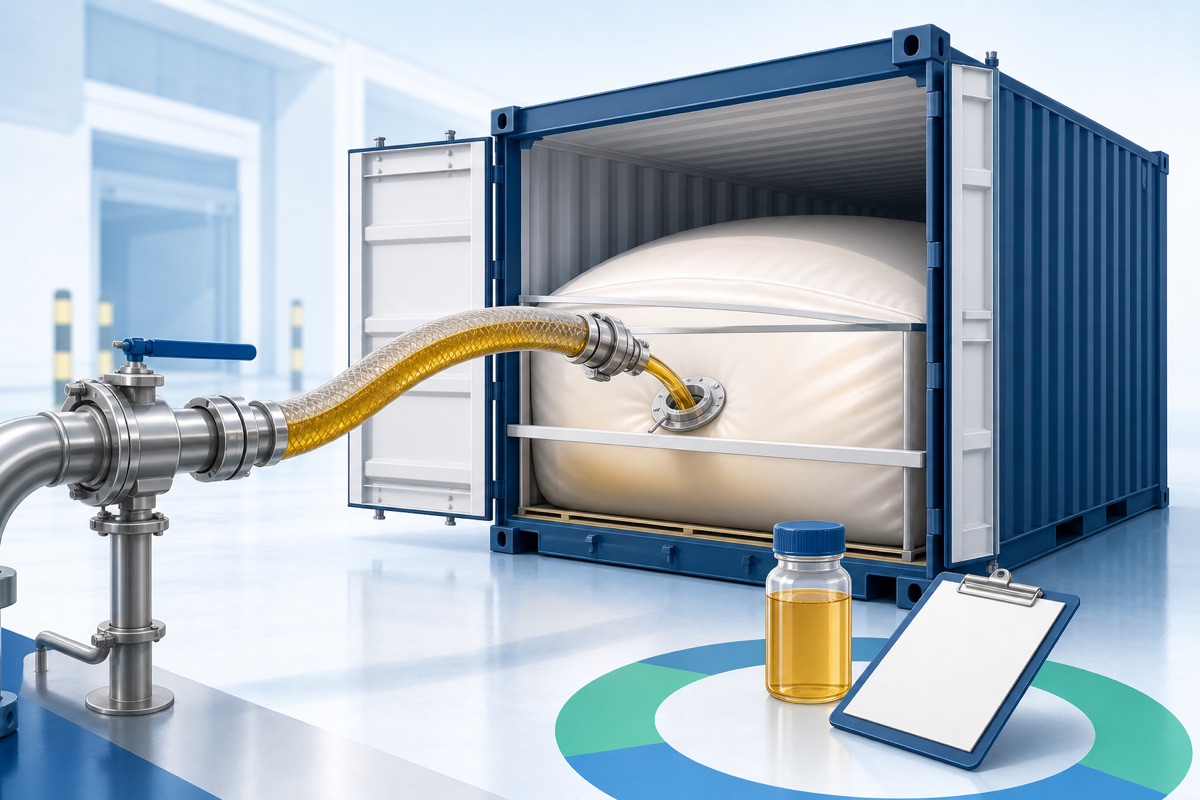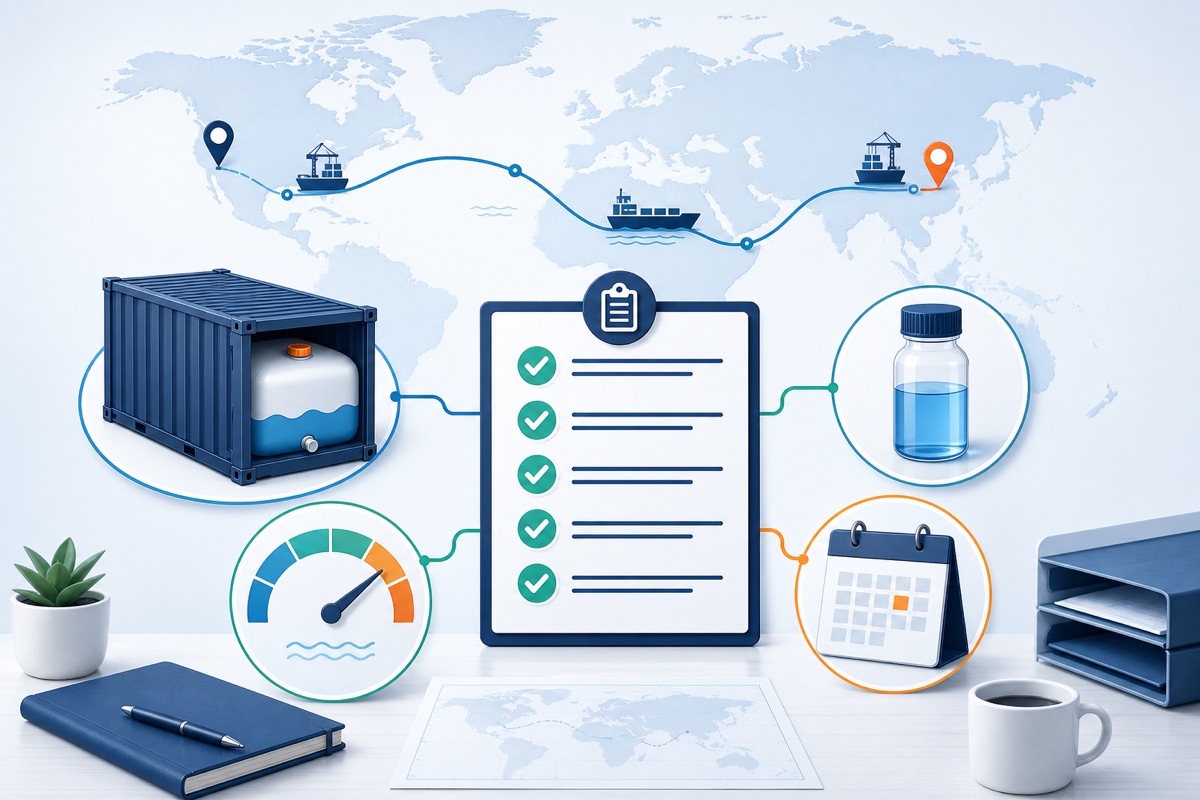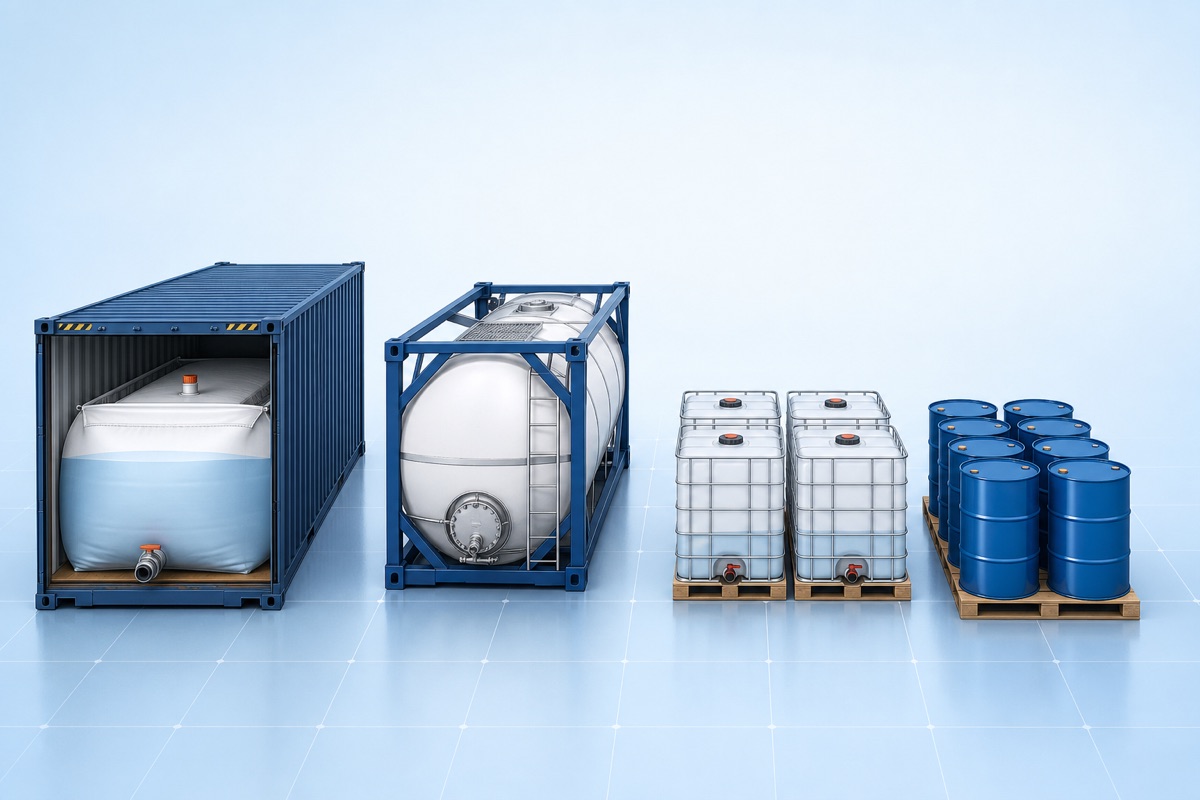
Flexitanks, ISO tank containers, intermediate bulk containers and drums solve different liquid logistics problems. There is no universally cheapest or safest format: the defensible choice begins with the cargo classification and compatible containment system.
After that first gate, compare the real route—shipment size, repeat frequency, cleaning or return flows, origin and destination equipment, handling touches, carrier acceptance and end-of-use obligations.
First gate: classification and compatibility
Do not compare packaging on price before confirming what is legally and technically eligible. Flexitank industry guidance addresses compatible liquids classified as non-dangerous goods. ISO tank designs can serve a wider range, but the exact tank specification and approvals must match the substance and applicable regulations.
For every option, review the current SDS, dangerous-goods status, density, vapour or venting needs, viscosity, temperatures and compatibility with all wetted materials. Carrier acceptance and route restrictions are separate decisions from package compatibility.
A non-dangerous classification does not automatically make a liquid suitable for a flexitank, IBC or drum. Obtain product-specific compatibility and route review.
Flexitank, ISO tank, IBC and drum comparison
This table is a screening tool, not an approval matrix. Actual eligibility varies by the product, package design, supplier instructions, jurisdiction and contracted transport chain.
| Criterion | Flexitank | ISO tank | IBC tote | Drums |
|---|---|---|---|---|
| Typical logistics pattern | One-way compatible non-dangerous liquid in a containerised system | Tank-based bulk flow, often with cleaning and repositioning | Pallet or unit handling with intermediate-volume packages | Smaller individual packages and flexible lot splitting |
| Dangerous-goods potential | Generally not for dangerous goods | Possible only with a correctly specified approved tank and compliant operation | Possible only with correctly rated packaging and regulations | Possible only with correctly rated packaging and regulations |
| Destination need | Bulk hose, pump or gravity discharge plan | Tank discharge connection, safe access and return or onward plan | Forklift or pallet handling plus decanting setup | Manual or mechanical handling and decanting setup |
| Reverse logistics | Used-system drainage and lawful recovery or disposal | Cleaning, inspection and tank return or repositioning | Return, reconditioning, recycling or disposal by package type | Recovery, reconditioning, recycling or disposal by package type |
| Split delivery | Usually one bulk receiver per loaded system | Bulk receiver or planned tank distribution | Well suited to multiple units or staged use | Well suited to small lots and distributed use |
Match the package to both facilities
A packaging choice can fail operationally even when the cargo is compatible. Flexitank and ISO tank movements need safe bulk transfer connections and a receiving plan. IBCs and drums introduce more individual handling units, storage positions and possible transfer steps, but may fit sites that cannot receive a full bulk load.
Document pump capability, hose and coupling standards, available labour, forklift capacity, sampling requirements, temperature control, spill response and operating hours at both ends. Also identify who installs, supervises, cleans, returns, drains or disposes of equipment.
- Can the receiver accept the planned quantity in one delivery?
- Are compatible hoses, couplings, pumps and electrical supplies available?
- Is heating or temperature conditioning required and approved?
- Can the site safely store and move IBCs or drums if those formats are chosen?
- Who manages residue, cleaning, return transport and packaging waste?
Route and shipment pattern can change the answer
One-way, steady-volume flows and multi-drop distribution create different constraints. A flexitank may align with a one-way bulk delivery, while a tank fleet can support repeat lanes when cleaning and repositioning are available. IBCs or drums can simplify partial deliveries but add unit handling and storage.
Check ocean carrier policy, transshipment points, inland weight rules, terminal processes and destination import requirements for the exact route. Acceptance on one lane, with one supplier or on a prior shipment must not be treated as blanket approval.
Build a total landed-cost model, not a packaging-price comparison
A useful commercial comparison includes every activity created or removed by the format. Supplier quotations should state scope and exclusions so installation, container preparation, supervision, cleaning, detention, repositioning and destination support are not hidden.
Do not rely on generic savings percentages. Use the actual cargo mass, container or package count, freight lane, facility costs and recovery obligations for the proposed shipment.
| Cost group | Inputs to request |
|---|---|
| Packaging and equipment | System or package supply, fittings, liners, restraint, rental or use charges |
| Origin operations | Container inspection, installation, filling, labour, supervision, waiting time |
| Transport | Ocean or inland freight, payload effect, terminal charges, route restrictions |
| Destination operations | Discharge equipment, heating if approved, labour, storage and delays |
| After use | Residue handling, cleaning, return, repositioning, recycling or lawful disposal |
A practical selection workflow
Start by eliminating formats that do not meet classification, package approval or compatibility requirements. Then test the remaining options against route acceptance and both facilities. Only after the technical and operational gates should the team compare total cost and commercial terms.
Record assumptions and owners for each decision. A quote-ready recommendation should show which documents were reviewed, what remains conditional and whose written acceptance is still required.
- 1. Identify the exact cargo and obtain current safety and technical data
- 2. Confirm regulatory classification and package eligibility
- 3. Obtain material and equipment compatibility review
- 4. Verify carrier, route, terminal and inland constraints
- 5. Validate origin and destination operating capability
- 6. Compare complete landed cost, service scope and contingency options
Frequently asked questions
Is a flexitank always cheaper than an ISO tank?
No. The outcome depends on freight, equipment availability, installation, cleaning or repositioning, detention, destination support and waste handling. Compare quotes with the same route, cargo data and service scope.
Can dangerous goods be shipped in a flexitank?
Flexitank industry guidance is for compatible liquids classified as non-dangerous goods. Dangerous goods require an appropriate approved containment system and full regulatory review; do not assume a standard flexitank is eligible.
When are IBCs better than a flexitank?
IBCs may fit smaller lots, staged consumption, split deliveries or receivers without bulk discharge storage. Their exact rating, compatibility, handling and regulatory suitability still need confirmation.
Why choose drums for liquid cargo?
Drums can support small batches, multiple consignees or controlled unit handling. They can also add handling, storage and packaging-management steps, so evaluate the whole operation.
Does carrier approval apply worldwide?
No. Acceptance can vary by carrier, service, route, terminal, system provider and cargo. Obtain confirmation for the specific booking and do not rely on a previous movement as universal approval.
Authoritative references
Compare options using your actual shipment
Provide the cargo data, route, shipment pattern and facility conditions. We will structure the questions needed to compare flexitank, ISO tank, IBC and drum options without assuming an outcome.
Build a comparison brief