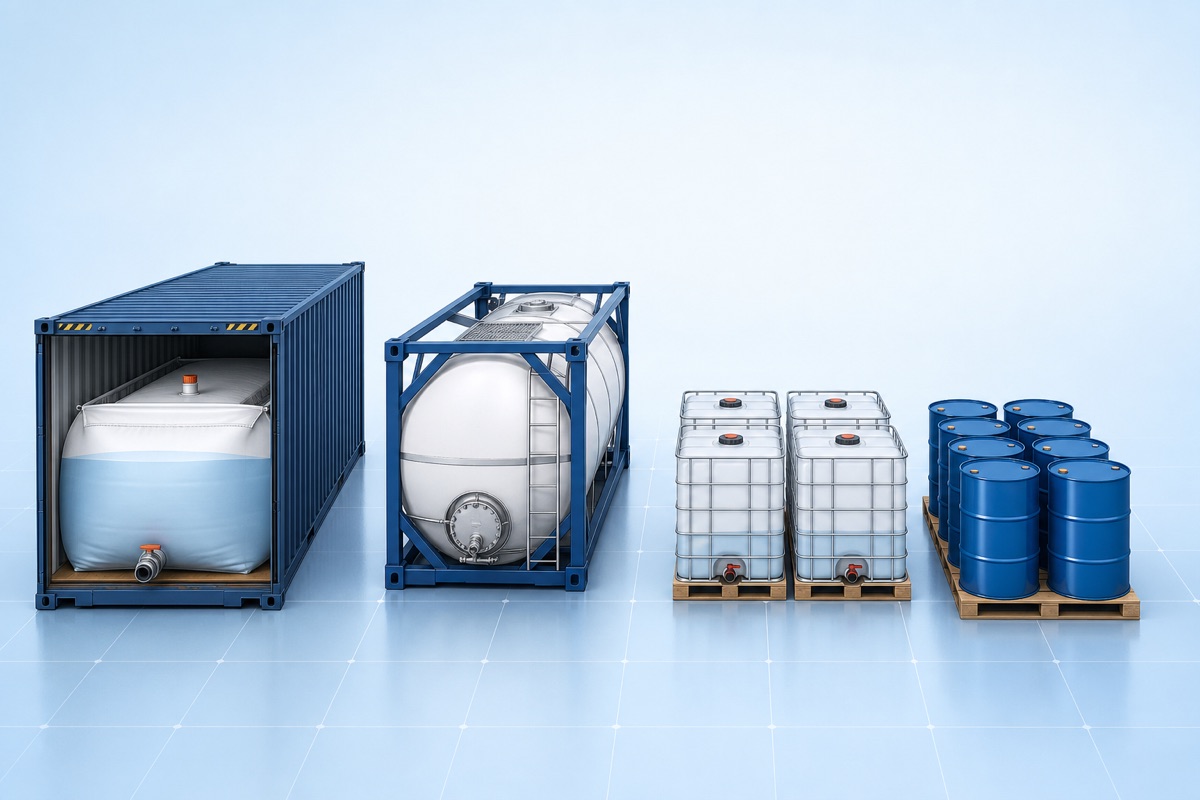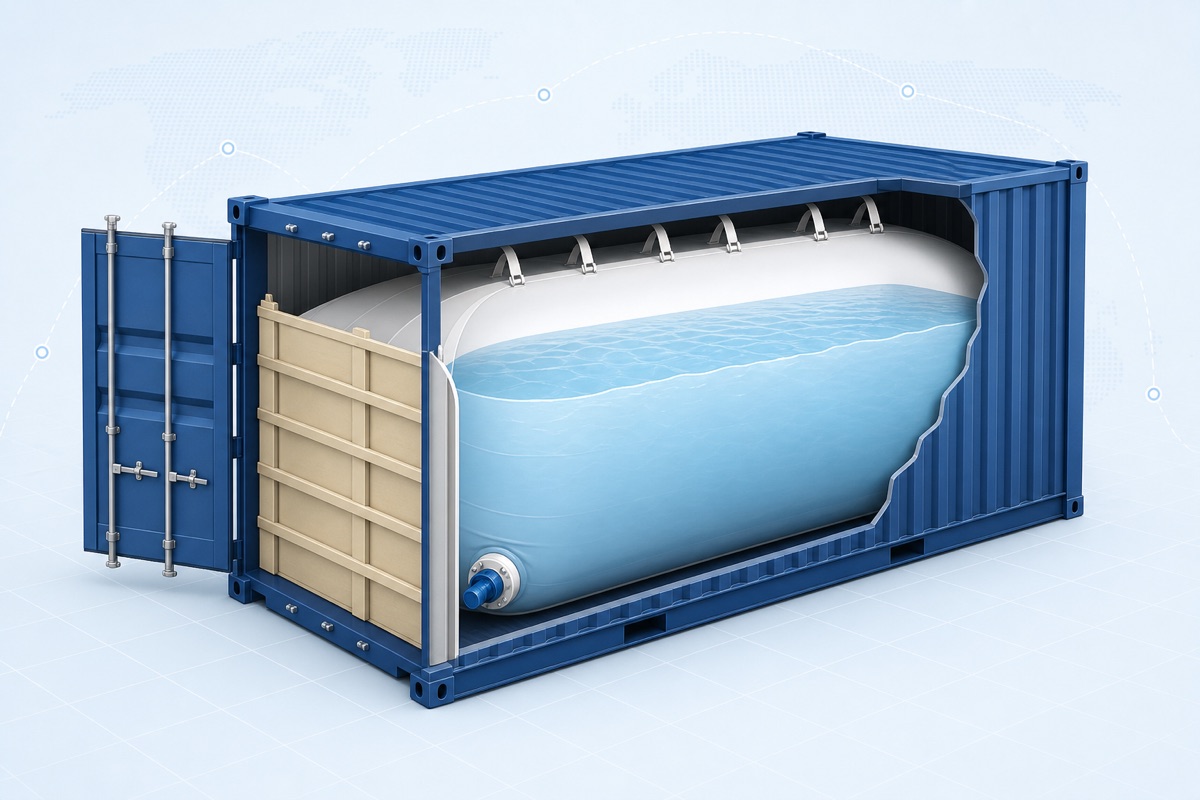
A flexitank, sometimes called a flexibag, is a large flexible bladder with one or more valves that is installed in a suitable general-purpose freight container. It works as a system with the container, lining, fittings and restraining equipment—not as a stand-alone bag.
It is intended for compatible liquids classified as non-dangerous goods. That classification is a starting point, not an automatic approval: the current SDS, physical properties, contact-material compatibility, operating temperatures, carrier rules and route must all be reviewed.
A flexitank is a complete transport system
The useful definition of a flexitank includes every component that keeps liquid contained and the container structurally suitable during the planned movement. The bag holds the cargo, while valves control transfer, liners protect contact surfaces and a bulkhead or other approved restraint manages forces near the doors.
The selected dry container must pass the operator's inspection criteria. Interior damage, contamination, protrusions, weak floorboards or unsuitable door-end conditions can make a container unacceptable even when it is valid for ordinary dry cargo. Installation and use must follow the flexitank supplier's current manual.
- Cargo-compatible flexitank and valve assembly
- Suitable container, liner and door-end restraint
- Approved hoses, pump connections and site procedures
- Trained parties with clear loading, transport and discharge responsibilities
How flexitank loading and discharge work
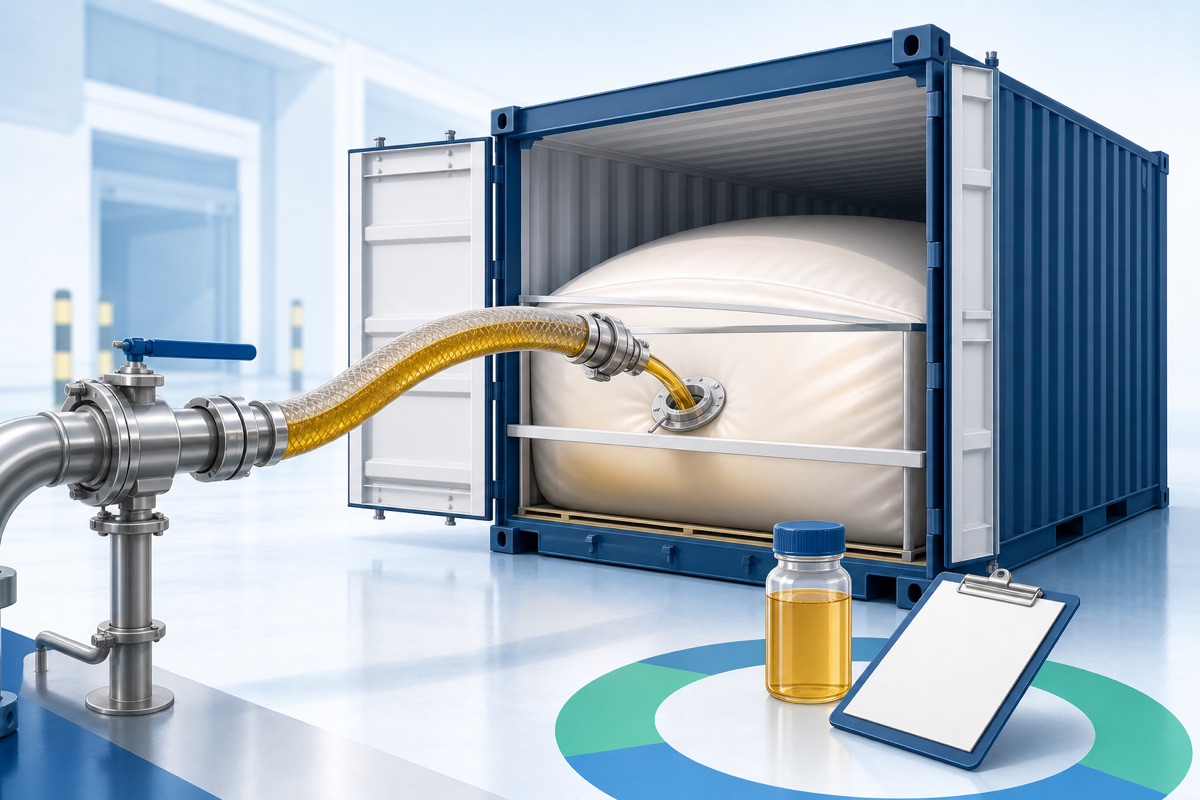
After the container is inspected, the system is installed according to the supplier's instructions and connected to the loading line. Cargo is transferred under controlled flow, pressure and temperature conditions. The actual fill limit is determined from the approved system, cargo density, container payload, route and carrier requirements—not from a generic volume claim.
At destination, operators secure the area, inspect for abnormal conditions and connect compatible discharge equipment before opening or moving fittings. Pumping method, hose arrangement, heating needs and residual-liquid handling should be agreed before the container departs.
Never improvise the installation, fill level, valve arrangement or discharge method. Use the manufacturer or operator manual that applies to the exact system.
Which liquids may be considered
Common enquiries include edible oils, food ingredients and certain industrial liquids that are not regulated as dangerous goods. A product name alone is not enough to decide suitability. Different grades or formulations can have different density, viscosity, temperature, contamination and material-compatibility requirements.
The shipper should provide an up-to-date SDS where applicable, plus a technical specification for food products when the SDS does not describe the operational properties. The appropriate flexitank supplier or technical reviewer must confirm the cargo against the bag film, valve, seals and any other wetted components.
- Exact commercial and chemical product name
- Dangerous-goods classification and current SDS status
- Density, viscosity and loading, transit and discharge temperatures
- Food-contact, allergen, previous-cargo or hygiene requirements
- Written compatibility and carrier or route acceptance status
Non-dangerous does not mean automatically compatible. Do not use a flexitank until classification, compatibility, carrier and route reviews are complete.
Capacity and planning depend on the shipment
A quote should not begin with an assumed number of litres. Density converts liquid volume into cargo mass, while the container plate, flexitank approval, inland axle limits, terminal rules and carrier conditions determine what can move on the route. Temperature can also change viscosity and transfer performance.
Planning should cover the entire door-to-door chain. Origin access, pump performance, loading supervision, verified gross mass, transshipment restrictions, destination equipment and used-bag handling can all affect whether the proposed setup is practical.
| Input | Why it matters |
|---|---|
| Density and intended fill | Used to check cargo mass against system and transport limits |
| Temperature and viscosity | Affect flow, pumping, possible heating and discharge time |
| Origin, destination and carrier | Determine local facilities, acceptance rules and route restrictions |
| Site capability | Confirms suitable hoses, pumps, connections, supervision and safe access |
The main controls are decided before loading
Good preparation reduces preventable failures: verify the cargo identity, use the correct system, inspect the container, keep fittings protected, follow the loading procedure and record seal and shipment data. The CTU Code and industry guidance provide a broader framework for packing and handling cargo transport units.
The packed container also needs a verified gross mass for applicable sea transport. VGM is a loading prerequisite under SOLAS, but it is not a carrier acceptance or compatibility approval. Each party should know who supplies the data, who supervises the work and who handles an abnormal condition.
- Stop if the container, bag, restraint or valve differs from the approved plan
- Stop if cargo documents or temperature conditions are unclear
- Escalate leaks, pressure abnormalities, damaged doors or unexpected movement
- Keep inspection, loading, seal, VGM and handover records
When a flexitank may—or may not—fit
A flexitank may fit a one-way bulk movement when the liquid is eligible, the system is compatible, the route is accepted and both sites can transfer the cargo safely. It can reduce the number of individual packages to handle, but that operational benefit should be evaluated against installation, supervision, residue and disposal requirements.
An ISO tank may be more suitable for regulated dangerous goods or repeated tank logistics; IBCs or drums may suit split deliveries, smaller lots or receivers without bulk discharge equipment. The right choice comes from cargo risk and supply-chain conditions, not from packaging preference alone.
Frequently asked questions
Are flexitank and flexibag the same thing?
The terms are often used for the same containerised liquid bladder, although naming varies by market and supplier. Confirm the exact system specification rather than relying on the label.
Can any non-hazardous liquid go in a flexitank?
No. Non-dangerous classification is only one gate. The current SDS or product specification, material compatibility, density, viscosity, temperatures, carrier policy and route conditions still require review.
Is a flexitank reusable?
Industry guidance commonly addresses single-use systems, but the exact design and disposal or recycling procedure must come from the supplier. Never reuse a system unless its approved design and instructions explicitly permit it.
Who confirms cargo compatibility?
The party with the relevant technical authority—normally the flexitank manufacturer or operator using cargo data—must provide compatibility confirmation. The shipper remains responsible for accurate cargo information, and the carrier separately decides acceptance.
What information is needed for an initial flexitank review?
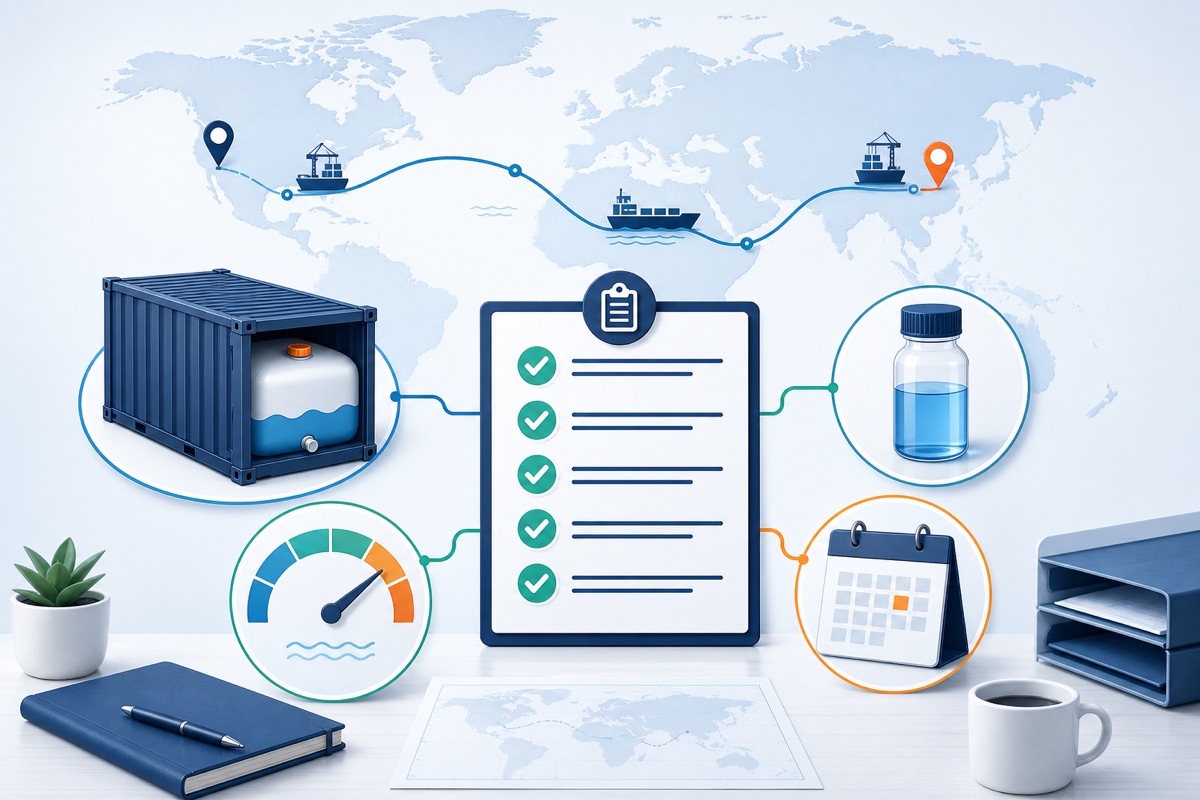
Prepare the exact cargo name, current SDS or technical specification, density, viscosity, temperature range, intended quantity, origin, destination, dates, container count and loading and discharge site capabilities.
Authoritative references
Turn shipment details into a review-ready inquiry
Share the cargo, SDS or specification, temperatures, route and expected quantity. BeLiquid will organise the information and identify missing review items; final compatibility and carrier decisions remain with the qualified parties.
Prepare my flexitank inquiry